


As challenges that no single nation can solve alone—such as climate change and ocean-related issues—grow ever more severe, the world continues to face deeper conflict, division, and mistrust. In times like these, the need to understand one another and to view the world based on reliable information has never been greater.
Established in 1986 to advance international peace, the Sasakawa Peace Foundation marks its 40th anniversary this year. As a private foundation, independent from governments and corporations, we are uniquely placed to work together with a wide range of partners.
In an increasingly complex world, our mission for the next 40 to 50 years has become even more significant and more clearly defined.
We seek to not only analyze global realities through open thinking and multifaceted perspectives, but to go into the field, connect with people face to face, and foster channels of dialogue where engagement has too often been difficult.
We nurture the next generation of leaders who will contribute to the global common good.
We go beyond analysis and debate by designing concrete proposals and implementing programs.
Based in Japan and guided by the principle of peace embodied in our name, we are committed to working hand in hand with diverse partners around the world to chart a future of hope together.
40th anniversary
-
2026.08.25
Sasakawa Peace Foundation 40th Anniversary Video
Established in 1986 to advance international peace, the Sasakawa Peace Foundation (SPF) celebrates its 40th anniversary in September 2026. This commemorative video brings together the perspectives of SPF Honorary Chair Yohei Sasakawa, The Nippon Foundation Chairman Takeju Ogata, and SPF President Atsushi Sunami to reflect on the foundation's history, its enduring mission, and its vision for the future.
40 years of the Sasakawa Peace Foundation
1975
Establishment of the Japan Foundation for Shipbuilding Advancement (later renamed the Ship & Ocean Foundation (SOF), now Ocean Policy Research Institute)
1986
Establishment of the Sasakawa Peace Foundation (SPF)
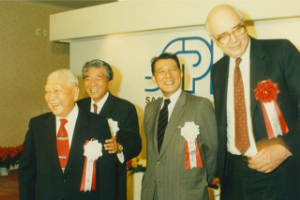
December 1986: Foundation inauguration event with former U.S. Federal Reserve Chairman Paul Volcker as guest of honor
1987
Launch of the World Maritime University (WMU) Sasakawa Fellowship Program
1989
Establishment of the Sasakawa Japan–China Friendship Fund and the Sasakawa Island Nations Fund (later renamed the Sasakawa Pacific Island Nations Fund)
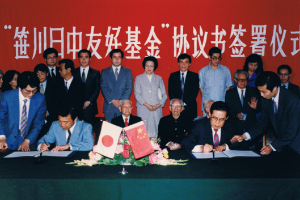
1990: Signing ceremony for the Sasakawa Japan–China Friendship Fund
1990
Establishment of Sasakawa Peace Foundation USA with support from SPF
1991
Establishment of the Sasakawa Central Europe Fund
1992
Establishment of the Sasakawa Southeast Asia Cooperation Fund (later renamed the Sasakawa Pan Asia Fund)
1993
Launch of the International Northern Sea Route Programme (INSROP)
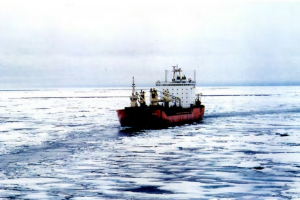
A voyage in the Arctic Ocean
INSROP was a joint research project led by Japan, Norway, and Russia to explore the feasibility of northern sea routes.It produced some 200 papers that form the basis of current research on Arctic shipping routes.
2007
Contribution to enactment of the Basic Act on Ocean Policy
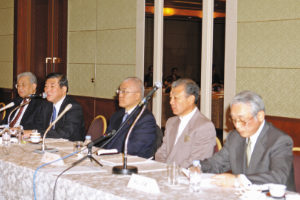
2006: Press conference to announce the Ocean Policy Outline and Draft Basic Act on Ocean Policy (provisional title)
SOF prepared the Ocean Policy Outline and the Bill Outline. The Basic Act on Ocean Policy was subsequently enacted as a legislator-sponsored bill. As a private think tank, the foundation played a leading role in connecting stakeholders and facilitating cooperation between government ministries and was instrumental in the enactment of the law.
2009
Establishment of the Sasakawa Middle East Islam Fund, replacing the Sasakawa Central Europe Fund
2011
Transition to a Public Interest Incorporated Foundation
2015
Merger of the Sasakawa Peace Foundation and the Ship & Ocean Foundation; Launch under a new mission
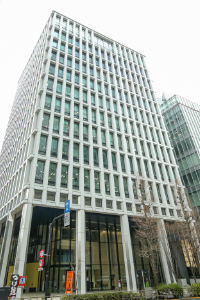
New headquarters open in Toranomon, Tokyo
2017
Reorganization and strengthening of the organizational framework
Beginning in 2009, SPF expanded its independent initiatives, with a focus on peacebuilding and other practical work in the field, along with research and policy recommendations around Japan-U.S. relations. Meanwhile, in response to new developments in the security environment and the merger with the Ship & Ocean Foundation (Ocean Policy Research Foundation), SPF undertook a major organizational restructure to re-position itself as a “Think & Do Tank.”
2022
Launch of the Sasakawa Scholarship Program
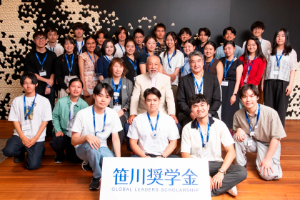
Scholars at SPF headquarters
To cultivate new leaders in Japan with the skills to thrive on the world stage, the foundation established this grant-based scholarship program. There are no restrictions on the scholars’ field of study or post-graduation career path.
2026
Launch of the Center for Mediation Support
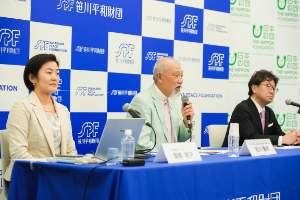
Press conference to launch the Center for Mediation Support
Our Mission and Guiding Principles
History and Founding Philosophy
Japan emerged as a major economic power in the mid-1980s, against a backdrop of ongoing internationalization and growing recognition of a raft of global challenges. As a result, there was an expectation that Japan should make a greater contribution to the international community. This was the context in which the Sasakawa Peace Foundation (SPF) was established in 1986 with funding from The Nippon Foundation and the motorboat racing industry, with a charter to complement government-led economic cooperation initiatives and help build the foundations for peace by promoting international exchange and cooperation from a private-sector perspective. To this day, the foundation remains committed to the founding principles of improving human welfare and contributing to the international community.
01A journey evolving with changes in the international order
Over the years, the role and expectations of SPF have evolved in line with changes in the international order and wider social trends. To this end, we continuously review our systems, methodologies, and scope of engagement as new challenges arise, such as helping countries transition to democratic government and market economics in the post-Cold War period; pursuing dialogue around civilizations and religions; and conducting research on security challenges in an increasingly multipolar era. In an ever-changing world, SPF strives to identify key issues and put in place frameworks to enable collaborative support and cooperation initiatives that extend into the future. We are constantly reviewing and reexamining the role of the foundation while exploring new approaches to cooperation that can make a lasting contribution to peace.

02International exchange through dialogue
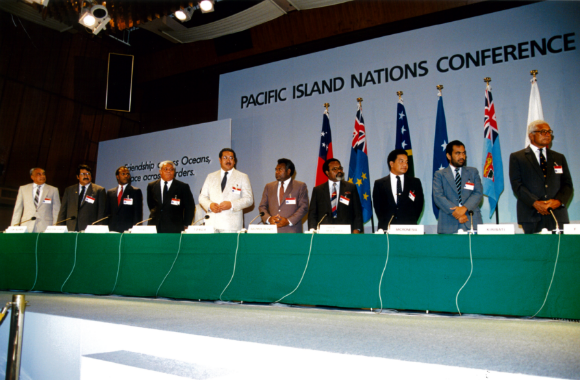
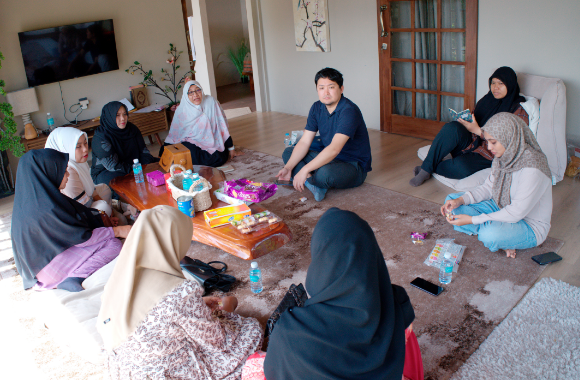
Peace is predicated on trust and mutual understanding. At times when intergovernmental relations are strained, SPF is often able to maintain channels of dialogue in our capacity as a private organization. For example, we set up opportunities for interaction at times when Japan–U.S. relations are under strain; we facilitate ongoing exchange initiatives through the Sasakawa Japan-China Friendship Program; and we work to build trust with Pacific island nations. The foundation strives to nurture closer relations with a wide range of countries and regions, including the Middle East and Russia. Through our commitment to engaging with sincerity, working to overcome differences, and sustaining dialogue over time, we help to keep key relationships intact during periods of difficulty and build trust for the future. This is a central pillar of “Sasakawa-style” public diplomacy.
03Proactively identifying issues and designing solutions
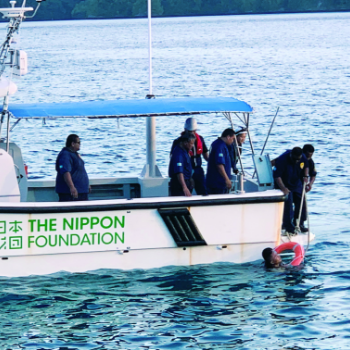
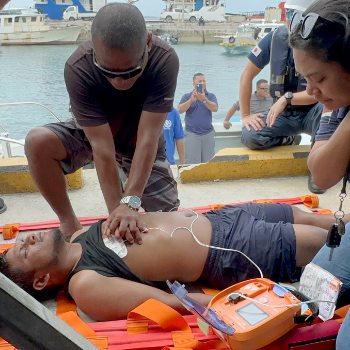
Society is constantly changing, causing new issues to emerge and existing issues to become increasingly worrisome. As an independent and highly specialized organization, SPF is able to identify emerging issues from the earliest stages and apply novel approaches that are free from the constraints of conventional frameworks. For example, we have demonstrated the proven effectiveness of deradicalization programs and the key role of women in conflict regions, and reported these findings to the international community. In Micronesia, SPF has helped to boost maritime security by providing operational assistance for small patrol vessels donated by The Nippon Foundation. SPF works to develop new and novel solutions in a variety of fields, such as impact investment, where the proceeds of asset management are used to fund beneficial programs, as well as programs to address issues faced by foreign workers in Japan.
04Local solutions for local issues
The Sasakawa Peace Foundation frequently sends representatives to speak with local stakeholders and communities about issues that affect them. It is this deep level of engagement in the field that enables SPF to use our specialist expertise to identify early indicators of change, determine the structural and substantive issues, and design innovative and pioneering solutions. We take a long-term approach to addressing challenges by developing solutions that are tailored to local circumstances and led by local stakeholders. Examples include dialogue with governments and local communities in conflict-affected regions in Asia, and projects implemented in tandem with peoples of the Arctic region and island nations. In this way, we seek to drive sustainable models of change and promote collaborative approaches in pursuit of peace.
05A Think & Do Tank helping to bridge the knowledge gap
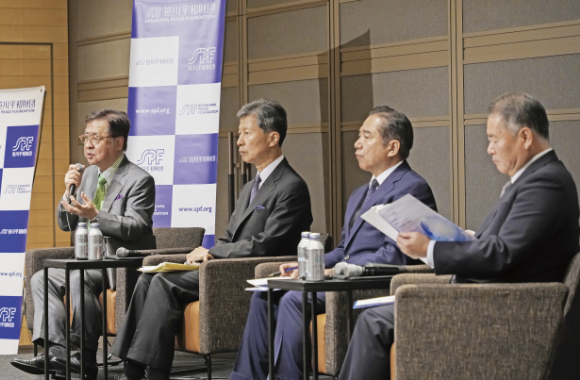
To bring together practical knowledge gained in the field with policies and systems, the foundation has expanded its role from a grant-making organization to a “Think & Do Tank.” For example, SPF participated in the Study Group on the Basic Act on Ocean Policy, and has also submitted research-based proposals on cyber domains. The Northern Sea Route Project is another prime example of successful international collaboration. In this way, SPF is able to leverage our strengths as a private organization to transcend regional issues and power relations, working across multiple fields to engage directly in areas where governments are unwilling to commit. By bringing together a diverse range of perspectives and expertise from within and outside Japan and advancing evidence-based dialogue and policy recommendations, SPF continues to take the lead in addressing emerging challenges.
06Nurturing the next generation
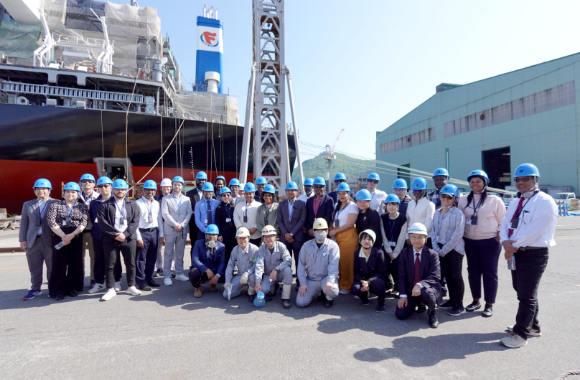
Training and development represents an investment in the future. SPF is involved in a range of training and development initiatives, including training programs for key personnel from a variety of participating nations at the World Maritime University (WMU), and facilitation of exchange between Japan and the U.S. to benefit the next generation of researchers. The Sasakawa Scholarship, launched in 2022, supports young people in Japan who are motivated to address international challenges. The scholarship program is predicated on a long-term vision of investing in future generations by equipping them with the skills and capabilities needed to address key issues and challenges in the world.
Building on our mission, looking to the future
The world is experiencing a period of instability and uncertainty, beset by a multitude of factors including upheaval of the international order, the impacts of climate change, and significant changes in population trends. The unstoppable and irreversible march of AI is upending many of our traditional notions about how the world works. Now more than ever, the Sasakawa Peace Foundation must recommit to our founding principles of engaging directly with local communities, facilitating dialogue among stakeholders, and developing talented leaders for the future. We must remain determined and practical, willing to take action with a combination of enthusiasm and humility, exhibiting both pride as specialists in the field and deep respect for our partners and stakeholders. Our solemn commitment is to leave a better world for future generations.